
Featured Book | Published
Academic Book
Professor David Torevell
Professor David Torevell. Liverpool Hope University, UK.
I was inspired, consoled and nodding continuously with agreement as I turned the pages of this very important book which deals with a crucial question all those involved in education urgently need to ask: Who are we and what makes us human? This in turn is related to the pressing dilemma of the purpose of education. Ontic and teleological questions are never separated. Although this might seem on obvious investigation to address, the author claims that it is rarely examined. Identity politics does not really touch on it. Therefore, there is a pressing need to uncover the often hidden, assumptions (he rightly calls them hegemonies) underlying notions of the self presently operating in educational discourse and practice.
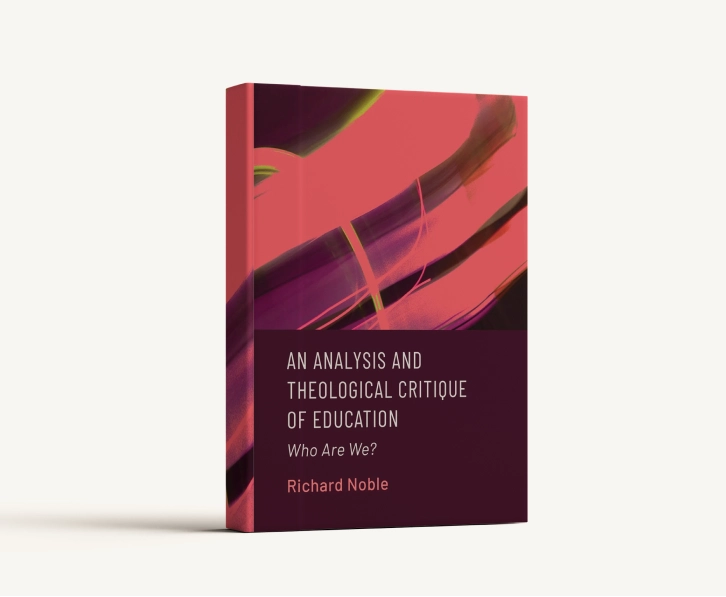
He offers a counter-narrative based on theological presuppositions, although he is fully aware that this discipline has been sidelined in education for a considerable time. His focus is on Radical Orthodoxy and the Christian contemplative tradition. He contends that these two developments will assist us in grounding our educational thinking on firmer ground situated in a belief about the complex relational self. Placing theology at the discussion table and assuming for it a legitimate role as a serious, public interlocutor is necessary. The insights of theological anthropology need more recognition. Read the book carefully to see why the author regards his chosen theologies as ‘non-violent, reasoned and fertile’.
In some ways I have been waiting impatiently for this book to appear. Now it is here, I am pleased to highly recommend it to others. I think it deserves as wide an audience as possible and should be discussed regularly by all those working in education in whatever capacity. It also needs to be on the essential reading list of every teacher training course.
Dr. Alain J.E. Wolf
Dr. Alain J.E. Wolf, Honorary Research Fellow, University of East Anglia, UK
The three questions “Who am I?”; “What is a self?”; “What does it mean to be human?” are rarely, if ever, explicitly addressed in school inspection regimes and in daily teaching practice.
Richard Noble is the best person that I can think of to write lucidly and masterfully on this topic. Publication of this book is particularly timely as we grapple with issues related to post-pandemic disaffection in schools where hegemonies, subtly disguised as benign, yet perniciously determine the nature of our ultimate telos.
I believe this book is an invaluable and fundamental resource for all concerned with the reforming of the school experience and the ultimate, profound and inescapable mystery we confront when we ask the question: ‘Who are we?’
Emeritus Professor John Elliott
Emeritus Professor John Elliott. University of East Anglia, UK
What made Richard Noble’s study unique was the form in which the analysis of data about inspection reports and their impact on teachers and parents shaped up. This study broke with the secular tradition established in modern departments of educational studies in British universities and deployed concepts and methods of analysis that are rooted in an earlier tradition of disciplined educational thought that is best depicted as a form of philosophical theology. Drawing on teleological and ontological conceptions of human ‘purpose’ and ‘self’ within this tradition Richard Noble illuminates a spiritual dimension that underpins the practical experience of education as this is still understood and valued by teachers and parents in schools, but which the assessment methodology of Ofsted threatened to undermine.